I chanced upon this article. Maybe you'd be interested in what the OTs have to say about UDL in this short article: http://www.udlcenter.org/sites/udlcenter.org/files/UDL.pdf
Sunday, May 6, 2012

Thursday, May 3, 2012
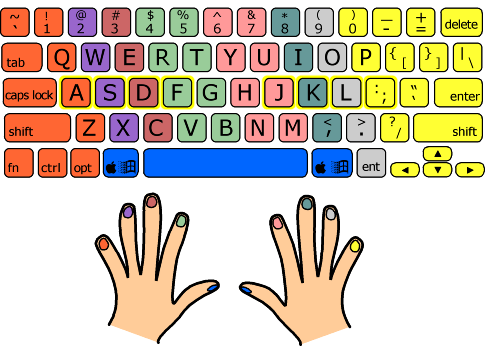
Teaching Keyboarding, More Than Just Typing
An article from Education World about keyboarding training for students:

Free online touch typing tutorials & practice lessons: http://www.sense-lang.org/typing/
Judge for yourself what you could do for your students to train their keyboarding skills...
What "bell ringers" do you use?

An ideal audience would stand in ovation to the performer at the end of a show, or at least this is true in the dreams of all performers. Teachers sometimes feel like performers too and perhaps the dream of their students lingering long after class to talk about what they have learned spur on a lot of teachers to get better at their trade. The reality is, no sooner does the bell ring to signal the end of a class than the students pack up and leave the classroom.
What about at the beginning of the class? Are teachers quick enough to get the students to settle down when the bell rings to signal the beginning of a class? The pitfall for many teachers is that there is no plan or no good plan at that time to get their students immediately hooked on matters related to learning, if not to the content of the class. The result is a loss of precious instructional time and cropping-up of behavior issues in class. A bell ringer activity is a teaching tool to keep students engaged in thinking and learning. It could be used at the beginning or end of a class period. A good bell ringer activity can be guided by the three overarching principles of UDL: multiple means of representation, multiple means of action and expression, and multiple means of engagement.
A bell ringer activity should serve several important purposes such as:
- gauge students' background knowledge
- help students make connections with what they learned in last class
- make a topic fun to learn
- allow students different pathways to experience successful moments
- cue students to apply certain social and classroom rules for the next scores of minutes
- tap into students' creativity
- assess students' learning
A bell ringer should be meaningful, purposeful, and fun. It should not be simple copying act from a board.
What's your idea for an effective bell ringer? How may your knowledge of technology influence your design of bell ringer activities in your classroom? How may the UDL framework help guide your design of such activities in your lessons?
Some Internet resources related to bell ringers:
http://tuesdayswithkaren.blogspot.com/2009/09/bellringers.html
http://www.teachhub.com/exit-slips-effective-bell-ringer-activities
http://www.brighthubeducation.com/teaching-methods-tips/85130-bell-ringer-activities-for-your-classroom/
http://www.educationworld.com/a_lesson/lesson122.shtml
http://tuesdayswithkaren.blogspot.com/2009/09/bellringers.html
http://www.teachhub.com/exit-slips-effective-bell-ringer-activities
http://www.brighthubeducation.com/teaching-methods-tips/85130-bell-ringer-activities-for-your-classroom/
http://www.educationworld.com/a_lesson/lesson122.shtml
Monday, April 30, 2012
Some free webinars for you to consider...
AbleNet Online Professional Development Sessions:
http://www.ablenetinc.com/emails/Newsletters_2012/AN-Univ-April2012x2.html
AbleNet Online Professional Development
http://www.ablenetinc.com/emails/Newsletters_2012/AN-Univ-April2012x2.html
AbleNet Online Professional Development
BubCap Pro for iPad, iPod Touch, and iPhone
I find this low-tech tool from RJCooper's website:
http://rjcooper.com/bubcap
The Problem: Autistic, young, difficult, cognitively 'early' individuals press their i-device's Home button and exit the app you want them in.
The Solution: Cover your Home button with a special BubCap Pro that I have tested and adapted. BubCaps are small aluminum 'tab's (the manufacturer actually makes a variety for different purposes, but the aluminim "Pro" model is the only one I've found all-around success with). They self-adhere to the cover your Home button. The Home button cannot be pressed directly now, by anyone! It works great! :) Problem solved!
http://rjcooper.com/bubcap
The Problem: Autistic, young, difficult, cognitively 'early' individuals press their i-device's Home button and exit the app you want them in.
The Solution: Cover your Home button with a special BubCap Pro that I have tested and adapted. BubCaps are small aluminum 'tab's (the manufacturer actually makes a variety for different purposes, but the aluminim "Pro" model is the only one I've found all-around success with). They self-adhere to the cover your Home button. The Home button cannot be pressed directly now, by anyone! It works great! :) Problem solved!
 |
| A Picture of Two Hands Putting a Self-Adhesive Pad on the Apple iPad Home Button |
What, it costs about 12 USD?... Find out if it is worth it!
Friday, April 27, 2012
Two critical things to do & remember each day as a teacher
Can't help but recommend this article from TECH&LEARNING
When I speak to teachers and parents of students and ask them if they are doing work that is meaningful, relevant, and worthy of the world, I often get puzzled looks or disappointing answers. Sometimes this is because there is a belief that we’re only preparing students for work worthy of the world. Actually doing is reserved for adults. Other times it’s because some believe that teaching their subject content is worthy in and of itself.
I generally get a variety of answers. An answer might be something like...
"Sure I am. My kids dissect virtual frogs in science class."
Or
"My kids turn in response to literature essays."
Yawn.
A worse answer will be, something like...
"Sure I am. My kids are going to be very well prepared for their standardized tests."
The answer some people think I want to hear might go something like this...
“Oh, yes I am! I use Smartboards and I have my kids come up and tap it.”
Ugh!
For those who know I think Smartboards are dumb, they may say something like this...
“We are using technology to publish student work.”
Good start but when I ask where the work is published and what is happening as a result of the work?
I often get answers like...
“It’s published on our website, blog, wiki, or maybe YouTube.”
Okay.
That’s nice, but if it’s meaningful and worthy of the world how are adults supporting students in getting this work out from just reaching a school audience and into the world? Publishing it to your school or class is nice, but it’s not the world. It doesn’t help young people feel like they matter. It doesn’t help them understand how they have the power to change the world. Publishing something and doing nothing is usually not empowering students to do as much as they can.
Unfortunately, in this age of accountability, many have lost sight of what really matters. In many schools it no longer matters what students, teachers or leaders are doing to change the world. What matters today is how well you help students fill in bubbles.
And, frankly...
That's a skill that doesn’t matter!
It's time to get back to the basics and by that I don’t mean reading, writing, and rithmetic. I mean, the basics of why we decided to do this work. We didn’t enter this field to help kids fill in tiny bubbles. We want our work to matter. We want to make a great impact on the lives of children. We know students won’t remember their favorite teachers or best times in school from the teachers who talked, textbooked, and tested. They will remember their teacher who told them they mattered. They won’t fondly remember the one who lied and answered that "you need to know this and take these tests to be prepared for the world." They will remember the teacher who told them they can change the world today.
How can you become that teacher? By doing and remembering two important things.
Here they are:
Every day educators must remember two things.
1) We are not teaching subjects. We are teaching children.
2) Children are more than test scores.
Every day educators must do two things.
1) Be aware of how you are supporting your children in doing work that is worthy of the world.
2) Ensure each child knows that they matter.
What does this really mean? Well, I’m bringing to you the two best people in the world that I know of to explain what I’m talking about.
Kiran Bir Sethi - Kids take charge
Watch this video to learn what happens when we empower kids to take charge and do work worthy of the world.
More videos of teachers can be found here: TECH&Learning (Teachers Matter)
or www.techlearning.com/Default.aspx?tabid=67&EntryId=4119
Angela Maiers - You Matter
Angela Maiers empowers youth to figure out why they and their peers matter. This reading and videos show how.
Source: TECH&LEARNING
http://www.techlearning.com/Default.aspx?tabid=67&EntryId=4119
When I speak to teachers and parents of students and ask them if they are doing work that is meaningful, relevant, and worthy of the world, I often get puzzled looks or disappointing answers. Sometimes this is because there is a belief that we’re only preparing students for work worthy of the world. Actually doing is reserved for adults. Other times it’s because some believe that teaching their subject content is worthy in and of itself.
I generally get a variety of answers. An answer might be something like...
"Sure I am. My kids dissect virtual frogs in science class."
Or
"My kids turn in response to literature essays."
Yawn.
A worse answer will be, something like...
"Sure I am. My kids are going to be very well prepared for their standardized tests."
The answer some people think I want to hear might go something like this...
“Oh, yes I am! I use Smartboards and I have my kids come up and tap it.”
Ugh!
For those who know I think Smartboards are dumb, they may say something like this...
“We are using technology to publish student work.”
Good start but when I ask where the work is published and what is happening as a result of the work?
I often get answers like...
“It’s published on our website, blog, wiki, or maybe YouTube.”
Okay.
That’s nice, but if it’s meaningful and worthy of the world how are adults supporting students in getting this work out from just reaching a school audience and into the world? Publishing it to your school or class is nice, but it’s not the world. It doesn’t help young people feel like they matter. It doesn’t help them understand how they have the power to change the world. Publishing something and doing nothing is usually not empowering students to do as much as they can.
Unfortunately, in this age of accountability, many have lost sight of what really matters. In many schools it no longer matters what students, teachers or leaders are doing to change the world. What matters today is how well you help students fill in bubbles.
And, frankly...
That's a skill that doesn’t matter!
It's time to get back to the basics and by that I don’t mean reading, writing, and rithmetic. I mean, the basics of why we decided to do this work. We didn’t enter this field to help kids fill in tiny bubbles. We want our work to matter. We want to make a great impact on the lives of children. We know students won’t remember their favorite teachers or best times in school from the teachers who talked, textbooked, and tested. They will remember their teacher who told them they mattered. They won’t fondly remember the one who lied and answered that "you need to know this and take these tests to be prepared for the world." They will remember the teacher who told them they can change the world today.
How can you become that teacher? By doing and remembering two important things.
Here they are:
Every day educators must remember two things.
1) We are not teaching subjects. We are teaching children.
2) Children are more than test scores.
Every day educators must do two things.
1) Be aware of how you are supporting your children in doing work that is worthy of the world.
2) Ensure each child knows that they matter.
What does this really mean? Well, I’m bringing to you the two best people in the world that I know of to explain what I’m talking about.
Kiran Bir Sethi - Kids take charge
Watch this video to learn what happens when we empower kids to take charge and do work worthy of the world.
or www.techlearning.com/Default.aspx?tabid=67&EntryId=4119
Angela Maiers - You Matter
Angela Maiers empowers youth to figure out why they and their peers matter. This reading and videos show how.
Source: TECH&LEARNING
http://www.techlearning.com/Default.aspx?tabid=67&EntryId=4119
Wednesday, April 25, 2012
UDL and Common Core FAQs
More about UDL and Common Core Standards -- from National UDL Taskforce
http://www.udlcenter.org/advocacy/faq_guides/common_core
Exerpt:
UDL is included in the section of the Common Core Standards called “application to students with disabilities”. In this section the authors referred to the definition laid out in the Higher Education Opportunity Act of 2008 (PL 110-135).The reference to UDL in this section may give the impression that UDL is just for students with disabilities. However, UDL not only applies to students with disabilities, it applies to all other learners as well...
There are many ways in which the Common Core Standards align to the UDL framework. Curricula (goals, methods, materials, and assessments) designed using UDL put an emphasis on creating effective, flexible goals, and the Common Core Standards provide an important framework for thinking about what goals will be most effective.
UDL emphasizes that an effective goal must be flexible enough to allow learners multiple ways to successfully meet it. To do this, the standard must not embed the means (the how) with the goal (the what). What do we mean by this? One good example is from the Mathematics standards: “apply and extend previous understandings of multiplication and division and of fractions to multiply and divide rational numbers.” (Common Core State Standards for Mathematics, Grade 7, The Number System, 7.NS, item 2, p.48) This standard is flexible enough that all learners can meet this goal because it does not specify how it must be done...
http://www.udlcenter.org/advocacy/faq_guides/common_core
Exerpt:
UDL is included in the section of the Common Core Standards called “application to students with disabilities”. In this section the authors referred to the definition laid out in the Higher Education Opportunity Act of 2008 (PL 110-135).The reference to UDL in this section may give the impression that UDL is just for students with disabilities. However, UDL not only applies to students with disabilities, it applies to all other learners as well...
There are many ways in which the Common Core Standards align to the UDL framework. Curricula (goals, methods, materials, and assessments) designed using UDL put an emphasis on creating effective, flexible goals, and the Common Core Standards provide an important framework for thinking about what goals will be most effective.
UDL emphasizes that an effective goal must be flexible enough to allow learners multiple ways to successfully meet it. To do this, the standard must not embed the means (the how) with the goal (the what). What do we mean by this? One good example is from the Mathematics standards: “apply and extend previous understandings of multiplication and division and of fractions to multiply and divide rational numbers.” (Common Core State Standards for Mathematics, Grade 7, The Number System, 7.NS, item 2, p.48) This standard is flexible enough that all learners can meet this goal because it does not specify how it must be done...
Subscribe to:
Posts (Atom)